In the evolving landscape of construction and manufacturing, reinforced materials have emerged as vital components. Leading industry expert Dr. Alice Thompson states, “Reinforced materials are the backbone of modern engineering solutions.” This underscores the essential role these materials play in enhancing structural integrity.
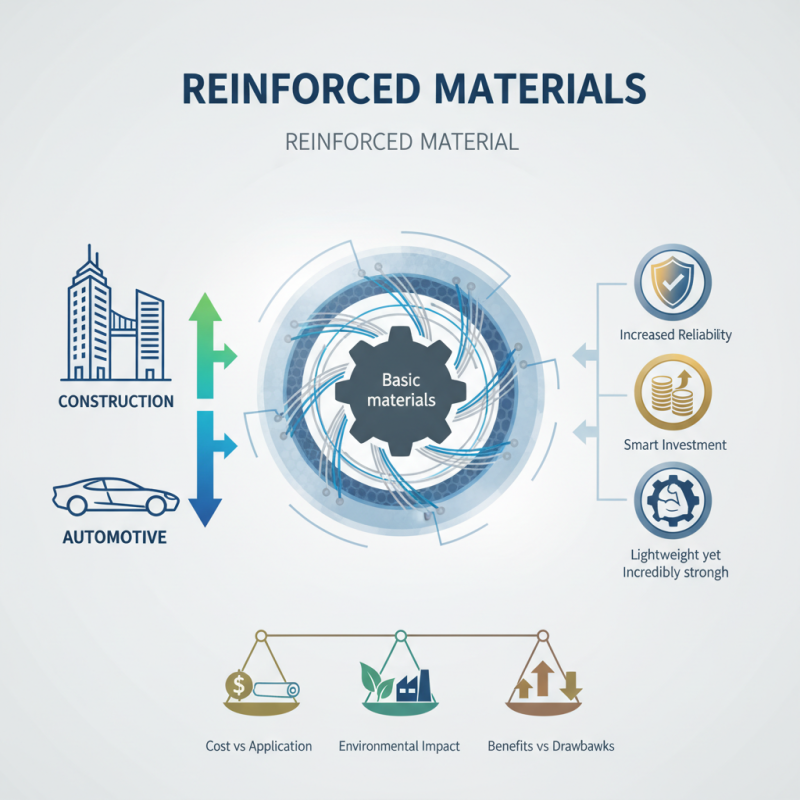
Reinforced materials are created by combining basic materials with additional elements, improving their strength and durability. This results in products that can withstand greater stress and frequency of use. Buyers benefit from increased reliability, making reinforced options a smart investment. Considered lightweight yet incredibly strong, these materials are transforming industries, from construction to automotive.
However, the choice of reinforced materials isn’t always straightforward. Buyers must consider factors like cost, application, and environmental impact. While reinforced solutions offer significant advantages, it's crucial to balance these benefits with potential drawbacks, such as higher upfront costs. Understanding these aspects can help in making informed decisions that align with both project needs and budget constraints.
Definition and Characteristics of Reinforced Materials
Reinforced materials are a type of composite material. They combine a base substance with additional components to enhance strength and durability. Common examples include concrete reinforced with steel or plastics reinforced with fibers. The primary characteristic of reinforced materials is their improved mechanical properties. These materials stand out due to their high tensile strength and resistance to impact.
Reinforced materials are versatile and used in construction, automotive, and aerospace industries. Their ability to bear heavy loads makes them essential for structural applications. Buyers benefit from reduced maintenance costs due to the durability of these materials. Moreover, their lightweight nature can lead to enhanced energy efficiency, making projects more sustainable.
Tip: When selecting reinforced materials, consider the environmental conditions they will face. This can significantly affect their longevity and performance. Remember, not all reinforced materials are the same. Understanding your specific needs will lead to better choices. Always consult with industry experts when uncertain about your options.
Types of Reinforced Materials Used in Various Industries
Reinforced materials are crucial in various industries, offering enhanced strength and durability. These materials typically include fiberglass, carbon fiber, and steel. In the construction industry, fiberglass-reinforced polymers are gaining traction. A report from the Composite Materials Handbook notes that these materials can reduce weight by up to 30% while increasing tensile strength significantly.
In aerospace, carbon fiber composites are preferred for their lightweight properties. According to an industry analysis by MarketsandMarkets, the carbon fiber market is expected to reach $6.7 billion by 2026, with applications in aircraft components. The low density and high strength of carbon fiber allow for improved fuel efficiency. However, challenges remain in cost and recycling processes.
Steel reinforcements are widely used in civil engineering. Steel-reinforced concrete remains a standard due to its excellent load-bearing capacity. Yet, there are concerns regarding corrosion. A study from the American Concrete Institute highlights that corrosion can reduce the lifespan of structures. This highlights the need for continuous innovation in protective coatings and alternative materials.
What is Reinforced Material and Its Benefits for Buyers? - Types of Reinforced Materials Used in Various Industries
| Type of Reinforced Material |
Common Uses |
Benefits |
Industries |
| Fiberglass Reinforced Plastic (FRP) |
Marine applications, chemical storage |
Corrosion resistance, lightweight |
Construction, Transportation |
| Carbon Fiber Reinforced Polymer (CFRP) |
Aerospace components, sports equipment |
High strength-to-weight ratio, stiffness |
Aerospace, Automotive, Sports |
| Steel Reinforced Concrete |
Buildings, bridges, roads |
Increased tensile strength, durability |
Construction, Civil Engineering |
| Glass Fiber Reinforced Concrete (GFRC) |
Architectural panels, sculptures |
Lightweight, design flexibility |
Architecture, Landscaping |
| Polymer Matrix Composites |
Consumer products, automotive parts |
Customization, impact resistance |
Manufacturing, Automotive, Household |
Key Benefits of Using Reinforced Materials for Buyers
Reinforced materials play a crucial role in various industries. Buyers often seek them for their durability and strength. These materials can withstand harsh conditions. They offer an edge over traditional options. This is particularly beneficial in construction and manufacturing. For instance, reinforced concrete is a common choice. It combines steel and concrete, resulting in a stronger structure.
One major benefit is the cost-effectiveness over time. Though the initial investment might be higher, the longevity of reinforced materials can lead to savings. They require less maintenance and have a longer lifespan. Buyers also appreciate the versatility of these materials. They can be tailored to fit different needs and applications. This adaptability can help in achieving specific project goals.
However, buyers should be cautious. Not all reinforced materials are created equal. Some may not meet the required standards. It's essential to research and consult experts in the field. Understanding the specific requirements of a project is vital. This helps ensure the right material choice. Balancing cost, strength, and application needs can be challenging yet rewarding.
Benefits of Reinforced Materials for Buyers
Comparative Analysis: Reinforced Materials vs. Traditional Materials
Reinforced materials have gained traction in various industries due to their unique properties. Unlike traditional materials, which may offer standard durability, reinforced materials provide enhanced strength. This improvement is pivotal in construction, automotive, and aerospace industries, where safety and longevity are critical. For instance, reinforced concrete can withstand greater pressures compared to its conventional counterpart. This change can lead to lower repair costs over time.
When considering the use of reinforced materials vs. traditional options, buyers must weigh their decisions carefully. Traditional materials often come with a lower initial price, but their long-term performance may lack reliability. A concrete example is steel vs. reinforced plastics. While steel is strong, reinforced plastics often provide better resistance to corrosion, leading to increased lifespan. However, the cost of reinforced materials might raise questions. Are the long-term savings worth the upfront investment?
Moreover, the environmental impact is another consideration. While traditional materials are sometimes more readily available, the production of reinforced materials can be more sustainable. Yet, their manufacturing processes are not always perfect. Buyers need to analyze the overall lifecycle of the material. Reinforced materials may offer superior benefits, but potential challenges in availability and cost persist. Hence, informed decisions are essential.
Future Trends in Reinforced Materials and Their Market Impact
The market for reinforced materials is evolving rapidly. According to a recent report by MarketsandMarkets, the reinforced materials market is projected to reach $150 billion by 2025. This growth stems from increasing demand in construction and automotive industries. Factors such as durability, lightweight properties, and resistance to corrosion make reinforced materials attractive options for manufacturers.
Future trends indicate a shift towards eco-friendly reinforced materials. Sustainable practices are gaining traction. Reports suggest that up to 25% of materials in use by 2030 could be sourced from recycled content. Innovations in bio-based composites are also emerging. Such materials not only reduce waste but also lower the carbon footprint.
Tip: Buyers should consider the lifecycle of materials. Understanding the impact of production and disposal can guide better purchasing decisions. Also, staying updated on certifications can indicate reliability and sustainability.
While the advantages of reinforced materials are clear, challenges remain. Supply chain complexities can hinder growth. Additionally, performance metrics for new materials need to be well-documented. Often, data is limited or inconsistent. Thus, investing in ongoing research can mitigate risks for buyers. Companies must remain agile to adapt to these market shifts while ensuring quality and reliability.
FAQS
: Reinforced materials are composites that enhance strength. They combine a base substance with additional components.
Common examples include concrete reinforced with steel and plastics reinforced with fibers.
They provide improved mechanical properties, high tensile strength, and impact resistance.
They can bear heavy loads and reduce maintenance costs due to their durability.
Buyers should consider environmental conditions affecting longevity and performance.
No, not all reinforced materials meet the required standards. Research is essential for the right choice.
The initial investment can be higher, though savings may come with longevity.
Their lightweight nature can enhance energy efficiency in projects, promoting sustainable practices.
Yes, they can be tailored for different applications to meet specific project goals.
Understanding project requirements and consulting experts helps in making informed choices.
Conclusion
Reinforced materials are specially engineered substances designed to enhance strength, durability, and performance compared to traditional materials. These materials often incorporate additives or reinforcements, such as fibers or composites, that improve their mechanical properties, making them suitable for a variety of industries, including construction, automotive, and aerospace. The key benefits of using reinforced materials for buyers include improved product longevity, increased load-bearing capabilities, and greater resistance to environmental stressors.
A comparative analysis reveals that reinforced materials often outperform conventional options, offering superior resilience and efficiency. As industries continue to evolve, trends indicate a growing reliance on innovative reinforced materials, which promise to influence market dynamics positively. Buyers can expect that these materials will play a crucial role in driving advancements, enhancing product performance, and meeting the increasing demand for sustainable and high-performance solutions in the marketplace.

 Kelong New Materials